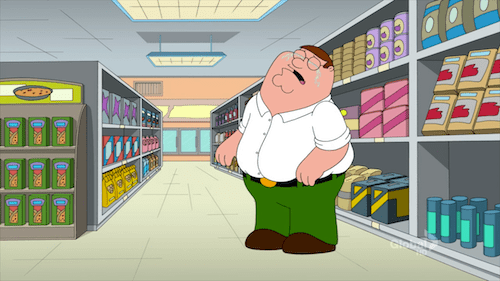
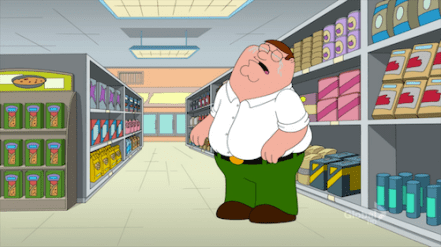
I’m staring in front of a vast arrangement of Keurig Coffee cups, shifting my weight from one leg to another. “She said what? Hold on” I tell my wife as I check my iPhone for the tenth time in five minutes, trying to remember what I put on the grocery list. And of course, coffee is nowhere to be found. I bring the phone back to my ear, “Hey, I’m still here. What happened next?” As I begin to gallivant to the next aisle, I immediately forget what was next on the list. On top of that, I have no idea what the last thing my wife said was. As I leave, I wonder how I will ever justify taking an hour to pick up almond milk, toothpaste and Cheerios. I say that multitasking is to blame.
Have you ever walked into the kitchen and thought “why did I come here again?” These days, our attention spans have been conditioned to constantly switch from one process to another.Now we can watch Netflix, laugh at our friend’s Facebook status and Instagram our dinner while eating it all at the same time. It’s no wonder our brains are hard-coded to hop around. Multitasking used to be a sought after trait by employers, but recently our eyes have been opened to it’s inefficiencies.
Our minds are just like any scarce resource. It is impossible to commit 100% of your capital to more than one process. When we apply ourselves to more than one activity at once, we are cheating ourselves of our potential. Most of us purposely interrupt one task to address another. We have trained our attention to be distracted on cue.
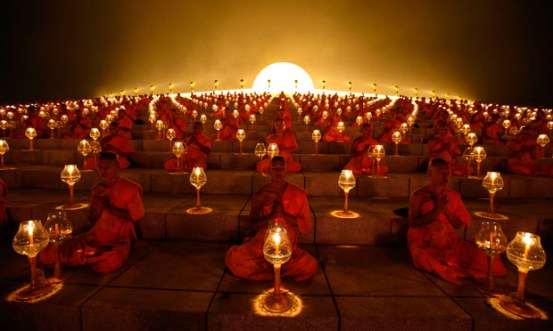
“It takes great training and effort to maintain attention on one object—in what Buddhists call concentration meditation—because the brain is highly susceptible to both voluntary and involuntary demands on its attention.” – Tim Wu of the New Yorker
I always had to have Ben & Jerry’s ice cream whenever my wife and I watched an episode of Dexter. What I thought I was doing was increasing the pleasure of the experience, when in fact I was doing the opposite. Multi-tasking hinders pleasure just like it hinders efficiency. I was minimizing the taste of my treat as well as the enjoyment of my favorite show. If you are like I was, try watching your favorite shows with no distractions. No food, no social media, nothing. On the flip side – if you usually eat dinner while watching TV, try the meal without it. From personal experience, I promise you will find both activities much more enjoyable.
The irony of multitasking is that many of us continue to do it. Like Dexter’s addiction to serial killing, we are convinced that it is necessary. Regardless of studies and proven examples, a bulk of us continue to favor convenience over effectiveness. Although our friend Dexter isn’t a role model, we can admire his commitment to mono-tasking. Thanks to his father Harry, he follows a strict code. He focuses on one task, blocking out all distractions around him. You never see him tweeting or checking who has visited his LinkedIn profile with his latest “project” on the table.
“I’m paying how much for HBO??”
Whether we are facing the challenges of grocery shopping, working at our desks, or enjoying our leisure time, multitasking is playing a role in our lives. What I am hoping to do is to open our eyes to what we are missing out on. If the activities we do can be improved simply by focusing and eliminating distractions, I believe that it’s worth a shot. Stanford researcher Clifford Nass suggests what he calls the 20-minute rule. Instead of multitasking by the minute, give yourself 20-minutes to a single task, then switch to the next one.
Multitasking has caused me to spend an undesirable amount of time doing simple daily tasks and robbed me of fully enjoying my favorite activities. Do you have any stories on how multitasking has gotten you into a compromising position? Anything like George’s situation below? Let’s hear it!
Pleasure and Pain – the two most primal concepts we naturally feel. Have you ever wondered though, where did this begin? This post goes against the grain of how I usually like to write, because it asks a lot of questions. Although, these are the types of mind-tingling questions that are fun to wonder.
Morten L. Kringelbach of Oxford University suggests that “…this relationship between pain and pleasure would be evolutionarily efficient, because it was necessary to know whether or not to avoid or approach something for survival“. For this excerpt, let’s assume that Dr. Kringelbach’s theory holds true. We can ask, why are the best feelings humans can feel triggered when good prevails – love, compassion, humor, kindness, etc. At what point did evolution decide what we are to interpret as pleasure and what as pain? My theory is that evolution doesn’t make decisions: it’s based off the decisions we make. I believe that something coded us that way from the beginning. Someone decided that it’s satisfying when the good guy wins.
We can assume that pain evolved from events that harm our bodies. Pleasure, on the other hand, seems to be a little more complex. If pleasure is evolutionary, why do we feel pleasure from so many things that aren’t generally considered vital for our survival? In contrast, why don’t we feel instinctual pleasure from performing things that are extremely good for us, like eating a balanced diet? That is more of a mental satisfaction, knowing that we accomplished something healthy. Although, it’s not the kind of pleasure we get from making a baby smile, or helping a loved one reach success through adversity. That kind of pleasure is very real in our whole body: Our mind, our stomach, and our heart. We can actually feel the chemicals releasing inside our body, soaking us internally with what our minds tell us “feels really good!”
Think about music. If something makes you feel ecstatic enough to get up and dance like a maniac, it can certainly be on the list of the best sensations we can feel. When we sing along with one of our favorite songs, it’s almost as if the words we are singing come from our hearts and not just our lungs. It’s a true feeling of elation. I wonder, is music necessary for our survival?
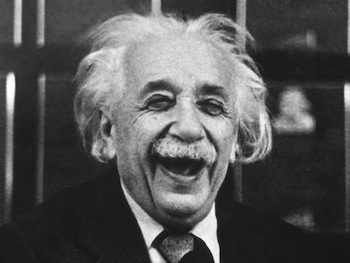
“If I were not a physicist, I would probably be a musician. I often think in music. I live my daydreams in music. I see my life in terms of music. … I get most joy in life out of music”
– Albert Einstein
Let’s address the greatest pleasure – Love. It’s un-arguably the best sensation we can experience. We could ask theorists, is love necessary for us to thrive as a species? If it’s the greatest pleasure we can have, then the logic of Dr. Kringelbach’s theory tell us that evolution made it that way because it is the most important factor in survival. I believe this to be true. But who decided love is the greatest sensation? Out of all the feelings we have, why is that the strongest? Regardless of what God you believe in, or if you believe in God, I have no doubt that there was an initial being that made this decision. When they did, they made sure that our Love for one another would stand out from everything else in the World.
I’m wondering what you, the reader think. Do you agree with Dr. Kringelbach, that pain and pleasure are a result of evolution? Do you believe there is a instinctual pain or pleasure that is/is not vital for our survival?



 Tim Mehta